
Phonics app vs reading aloud: what a tap can’t hear
A phonics app can tell whether a child tapped the right letter. It cannot tell whether the child can say the sound, or blend sounds into a word they have not seen before. Your child tells the story. Moss helps them read it.
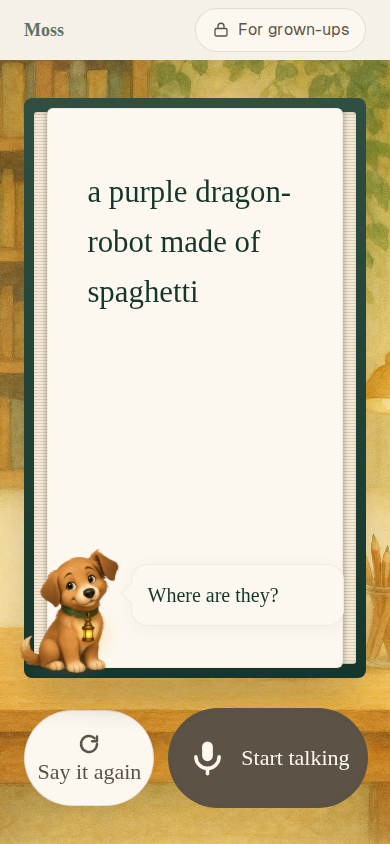
Taps and reading aloud
Most reading apps assess through taps, swipes and multiple choice. They do not listen to the child read aloud. Moss does, and it is built on a systematic phonics progression: sounds, then blending, then short vowels, then blends, then silent-e.
Words, read and heard
A word appears, large and calm, and your child reads it aloud. A read that needs help gets the sound that was hard. Evidence about decoding comes from words a child says, not from taps.
Fitting together
Sounds build the code and words put it to use, one step at a time, at your child’s level. One child, one place, one microphone.
What this page is
It describes how the product works. It does not describe how well any product teaches.
Keep reading
- See how Moss works.
- Compare: Moss Learning vs Reading Eggs
- Compare: Moss Learning vs Ello
- Guide: An app that listens to your child read — and what that actually means
- Guide: How to choose a reading app for kids — six honest questions
Ready to try it? Join the free pilot below.
Moss Learning is opening to families soon — we'll hold your spot.